
About This Article
This article explores how K-12 districts can respond to changing enrollment patterns through stronger enrollment visibility, family engagement, and long-term planning. It examines the enrollment signals district leaders can monitor and how bringing information together can support more proactive decision-making.
Executive Summary
Enrollment patterns continue to evolve across K-12 districts, creating both challenges and opportunities for district leaders. By bringing enrollment signals into a clearer view and staying connected with families throughout the year, districts can respond earlier, allocate resources more effectively, and support long-term enrollment stability.
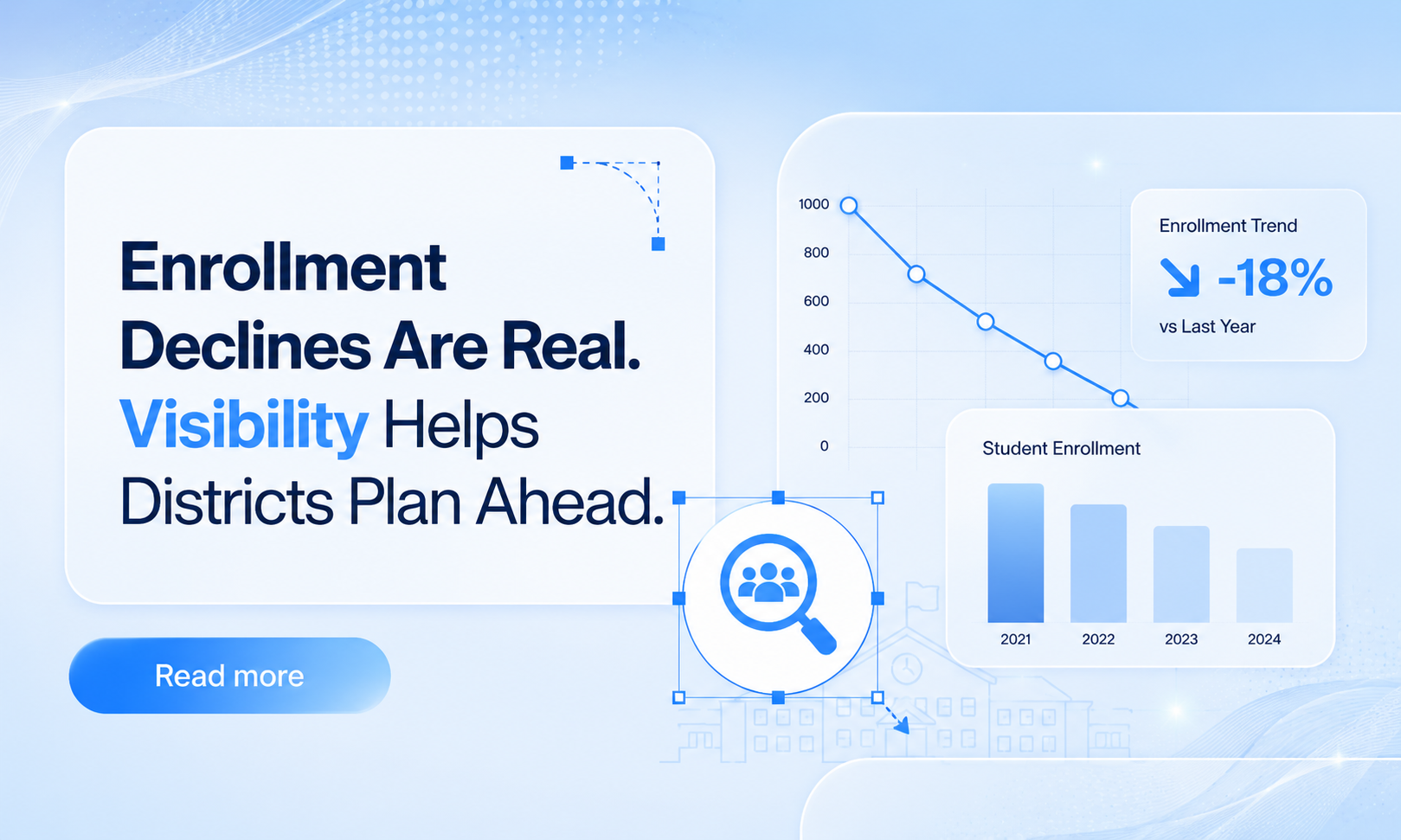
Across the country, school district leaders are navigating changes that have been gradually unfolding for years. Enrollment patterns continue to evolve, influenced by demographic shifts, expanding school choice options, migration trends, and the lasting effects of decisions families made during and after the pandemic. By 2026, many districts will be experiencing these shifts firsthand and planning carefully for what comes next.
District leaders are already doing important work every day, balancing resources thoughtfully, supporting students and staff, and making long-term decisions with their communities in mind. As budgets remain under pressure, many leaders are asking the same practical question: how can districts continue to plan responsibly while preserving the programs and experiences that families value most?
1.2M+
students shifted from public schools between 2019 and 2023
41 states
reported enrollment declines between fall 2019 and 2023
47M
projected K–12 enrollment by 2031, down from a peak of 50.8M
How Can Districts Identify Enrollment Trends Earlier?
Many districts already have meaningful insight within their existing systems. What often makes the difference is bringing that information together into a single clear view, helping leaders identify patterns earlier and respond with greater clarity, rather than relying solely on end-of-year counts.
Enrollment Signals Districts Can Monitor
| Enrollment Signal | How It Helps Districts Plan |
|---|---|
| Registration Trends | Identifies shifts in incoming enrollment |
| Feeder School Patterns | Highlights changes in student pipelines |
| Grade-Level Cohorts | Supports staffing and resource planning |
| Attendance Signals | Provides early indicators of enrollment changes |
For example, seeing kindergarten registrations trend slightly below the previous year in a particular area, or noticing gradual changes in feeder school re-enrollment patterns over time, can help districts create space for thoughtful outreach and proactive planning. Earlier visibility supports stronger conversations and provides additional flexibility as leaders prepare for what comes next.
Why Are Districts Looking Beyond Count Day?
Many districts are finding that long-term enrollment stability grows through ongoing relationships with families rather than seasonal enrollment activity alone. That often includes communication well before registration opens, outreach in the languages families speak, and enrollment experiences that feel clear, accessible, and welcoming from the beginning.
Small moments throughout the enrollment journey can shape how families experience the district. A form that works smoothly across devices.
A reminder sent at the right time. A follow-up for a family that began an application but did not complete it. These details help families feel supported, informed, and connected throughout the process.
What Matters Most to Families Today?
When families consider educational options, the decision is often shaped by more than academics alone. Many parents are asking questions that feel deeply personal:
Will my child feel supported here? Will communication be clear and accessible? Will our family feel connected to the school community?
Clear and accessible communication has become increasingly important for families evaluating their educational options. When families can easily understand their child’s progress, stay informed about district decisions, and feel their questions are acknowledged, it strengthens trust and long-term engagement.
Transparency plays an important role in helping families feel informed and connected throughout their district experience.
Which Enrollment Efforts Deliver the Greatest Impact?
Effective enrollment management does not always require large new investments. Some of the most meaningful improvements come from making better use of the information districts already have.
Bringing enrollment data into one place, streamlining communication with families, and creating a clearer view of emerging trends can help staff focus their efforts where they are needed most.
One district leader recently shared:
“I love that it streamlines all our data systems into one comprehensive tool.”
That perspective reflects a growing interest among district leaders in reducing fragmentation and creating a more connected view of district operations. When information is easier to access and understand, teams can spend less time gathering data and more time acting on it.
The value of these efforts is often evident both operationally and financially. In most states, per-pupil funding ranges from approximately $10,000 to $16,000 annually.
Even modest improvements in family engagement and retention can help districts preserve important funding, sustain programs, and continue supporting students effectively.
How Does Family Engagement Support Enrollment Stability?
There is a tendency to think of enrollment management as something that happens during registration season, a window of time to attract new students. But some of the most meaningful enrollment work happens in the months before that window opens, through the steady effort to make every family already in the district feel valued, informed, and genuinely part of the community.
Families who feel informed, supported, and heard are often more likely to remain engaged with the district over time. Parents who can easily find answers and navigate district processes often become advocates within their communities. That kind of sustained trust can gradually and meaningfully strengthen enrollment stability over time.
How Can Districts Prepare for What’s Ahead?
Enrollment patterns continue to evolve, and districts across the country are responding with care, adaptability, and thoughtful planning. The path forward is less about reacting to a single enrollment count and more about identifying trends early, staying connected with families, and understanding what communities need over time.
The shift from scattered information to a more connected view of enrollment is not simply about technology. It is about creating a clearer understanding of where a district stands today and where it may be headed tomorrow.
District leaders already possess much of the information needed to support these efforts. The opportunity often lies in bringing that information together in ways that make planning, communication, and resource decisions easier to navigate.
FAQs
Why are K-12 enrollment declines happening?
Enrollment changes are being influenced by demographic shifts, migration patterns, expanded school choice options, and post-pandemic family decisions.
How does enrollment visibility help districts?
Earlier visibility helps districts monitor trends, plan resources, and respond proactively to enrollment changes.
What data should districts monitor?
Registration trends, feeder school patterns, attendance data, cohort tracking, and re-enrollment activity can help identify changes early.
Why does family communication matter?
Clear communication strengthens trust, supports engagement, and encourages long-term family connections with the district.
Do districts need expensive systems to improve enrollment management?
No. Many districts begin by consolidating existing enrollment data and streamlining communication processes.