
About This Article
Artificial intelligence is changing classrooms faster than many districts expected. At the same time, a quieter shift is taking place—digital literacy is becoming just as important as access to the technology itself. Understanding how these two priorities come together may shape the next phase of K–12 education.
Bringing AI and digital literacy together can help districts move beyond technology adoption and toward meaningful learning outcomes. From understanding current adoption trends to strengthening responsible AI use, improving digital skills, and using data to guide decisions, the ideas in this blog offer practical context for district leaders planning the next stage of their technology strategy.
Imagine navigating the fast-paced world of school district leadership, where artificial intelligence reshapes classrooms overnight.
As superintendents, CIOs, and CTOs in U.S. school systems, you’re at the helm of this transformation, balancing innovation with practical outcomes.
This blog explores fresh angles on blending AI tools with essential digital skills training, drawing on real-world insights to spark strategic thinking.
What’s Driving the Surge in AI Adoption Across K-12 Districts?
The momentum behind AI in education stems from its ability to personalize learning and streamline operations, addressing long-standing gaps in engagement and efficiency.
Recent data shows that 60% of educators incorporated AI tools into their routines during the school year, with weekly users saving nearly 6 hours on tasks such as lesson planning and material adaptation.
This isn’t just a trend—it’s a response to evolving student needs in a tech-saturated era. To visualize the growth trajectory, consider this conceptual line chart outlining the projected expansion of AI in the K-12 market.
AI in the K-12 Education Market Growth
| Year | Market Value (USD Million) | Key Driver |
|---|---|---|
| 2024 | 391.2 | Initial personalization tools |
| 2026 | ~1,200 (estimated) | Widespread adaptive platforms |
| 2034 | 9,178.5 | Full ecosystem integration |
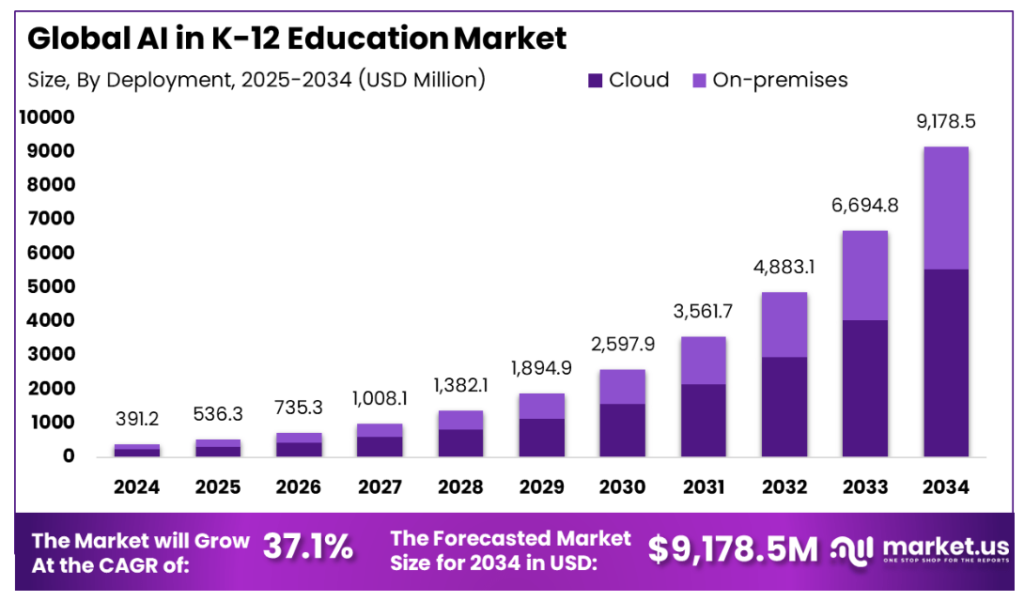
This upward swing underscores how school district AI strategies can unlock efficiencies, but only when paired with robust training to avoid over-reliance on automation.
How Are Digital Literacy Levels Holding Up Amid Tech Advances?
Digital fluency, encompassing critical evaluation of online content, ethical use of AI, and data interpretation, remains a cornerstone for future-proofing students.
Yet assessments reveal persistent challenges Recent study reveal that U.S. eighth graders’ average computer and information literacy score fell to 482 in 2023, down from 519 in 2018, and they lag behind international benchmarks in computational thinking.
This dip highlights inequities in access and instruction, amplified by uneven broadband and device availability.
These figures signal a call to action.
Digital Literacy and Computational Thinking Trends
| Category | 2018 Score | 2023 Score | Change |
|---|---|---|---|
| Computational Thinking | 498 | 461 | -37 points |
| Computer & Information Literacy | 519 | 482 | -37 points |
| International Average (2023) | – | 476 (CIL) / 483 (CT) | U.S. below in CT |
What Practical Steps Can Leaders Take to Merge AI with Digital Literacy Initiatives?
Start by auditing your ecosystem—map current tools against literacy goals to identify synergies.
Next, foster cross-functional teams blending IT, curriculum experts, and teachers for co-designed implementations.
Roll out phased pilots, such as AI-enhanced simulations in history or science, while integrating modules on data privacy and source verification.
District leaders can begin by:
Auditing current technology tools against literacy goals.
Building cross-functional implementation teams.
Launching phased AI pilots.
Integrating data privacy and source verification into instruction.
To streamline this process, the implementation framework below can help guide planning and execution.
AI and Digital Literacy Implementation Framework
| Phase | Focus Area | Tools/Strategies | Expected Outcome |
|---|---|---|---|
| Assessment | Evaluate baselines | Surveys & audits | Identify gaps in skills/tech |
| Integration | Embed AI in lessons | Adaptive platforms | Personalized paths boosting engagement |
| Training | Build capacity | PD workshops | 80% staff proficient in AI ethics |
| Evaluation | Measure impact | Analytics dashboards | Track literacy gains via metrics |
This structured path minimizes disruptions, turning AI for K-12 digital skills into a scalable reality.
Districts adopting such frameworks often see improved collaboration and quicker ROI on technology investments.
How Does Data Analytics Elevate These Efforts in Resource-Strapped Environments?
In an age of tight budgets, visibility into AI’s ROI and progress in literacy is non-negotiable. Unified platforms that aggregate usage data, student performance, and tool efficacy provide the insights needed for agile adjustments.
Maximizing Impact Through Data Visibility
Data visibility helps district leaders understand technology adoption, identify areas where additional support may be needed, and measure progress toward digital literacy goals over time.
When leaders can connect usage trends, student outcomes, and implementation metrics in one place, it becomes easier to make informed decisions about technology investments and future priorities.
This data-centric lens ensures strategic edtech planning yields measurable advancements in student outcomes.
Looking Ahead—What Emerging Horizons Should Districts Prepare For?
The horizon brims with possibilities: augmented reality for immersive literacy exercises, predictive models forecasting skill gaps, and AI guardians against misinformation.
Emerging Trends in AI and Digital Literacy
| Trend | Impact on K-12 | Preparation Tip |
|---|---|---|
| Immersive Tech | Deeper engagement | Invest in VR pilots |
| Bias-Aware AI | Fairer outcomes | Train on algorithm audits |
| Hybrid Models | Flexible learning | Update infrastructure |
By anticipating these shifts, leaders can position their districts as pioneers in future-ready digital education, cultivating resilient learners equipped for tomorrow’s challenges.
Moving Forward: AI and Digital Literacy Go Hand in Hand
In wrapping up, this journey reveals that AI and digital literacy aren’t siloed pursuits but intertwined levers for educational excellence.
By leveraging data-driven insights and creative integrations, U.S. school districts can foster environments where technology amplifies human potential.
As you chart your course, remember: the goal is not just adoption, but meaningful evolution that empowers every stakeholder in the learning ecosystem.
Frequently Asked Questions
Why are K-12 districts rapidly adopting AI tools?
AI helps personalize learning, automate routine tasks, and improve instructional planning.
Why is digital literacy becoming a priority for school districts?
Students must learn how to evaluate online information, understand AI systems, and use technology responsibly.
What is the biggest challenge districts face when integrating AI?
Balancing innovation with governance, training, and responsible data use.
How can district leaders monitor the impact of AI initiatives?
Through analytics dashboards that track adoption, engagement, and learning outcomes.
Why do districts need unified data dashboards for technology initiatives?
They connect strategy, technology use, and performance metrics into a single, clear leadership view.