Get real-time financial insights with AI-powered analytics. Unify your K-12 financial data, track spending, forecast with precision, and drive smarter decisions across your district.
Managing K–12 finances mean balancing limited budgets, rising costs, changing enrollment, and long-term commitments. When financial data is spread across multiple systems and reports, assessing fiscal stability and identifying potential risks becomes challenging.
The K–12 Finance Dashboard brings district financial information together. Superintendents, CFOs, and school business officers can assess fiscal health, fund balances, operating reserves, and financial trends.
Timely financial insights and historical comparisons support budget planning, financial oversight, and resource allocation. Districts can align spending with their priorities and plan for long-term fiscal sustainability.
Benefits
More Time to Adjaust
Rising health benefits, transportation, and staffing costs can strain school budgets at midyear. Recognizing financial pressure earlier gives district leaders time to review commitments and consider adjustments before options narrow.
Protect District Reserves
Covering recurring school expenses with reserves can reduce a district’s cushion for funding delays or unexpected costs. A clear fiscal context supports decisions that balance current obligations with future financial stability.
Preserve Student Support
Budget reductions affect classrooms and services differently. A clear financial context helps districts weigh spending trade-offs across instruction, special education, and student support while considering obligations and local needs.
Clearer School Board Decisions
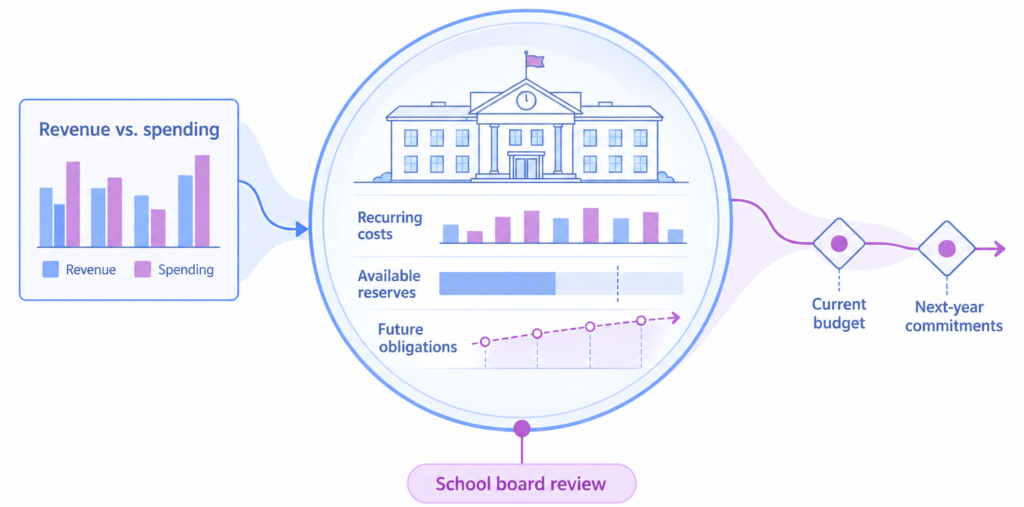
School boards must weigh immediate budget needs against future commitments. Shared financial evidence supports clearer discussions about staffing, school operations, and how spending decisions align with district priorities.
Core Capabilities
Features
District Financial Overview
01
Get a clear picture of district financial health, from revenues and expenditures to fund balances and reserves. Give school district leaders the information they need to monitor fiscal stability and make timely budget decisions.
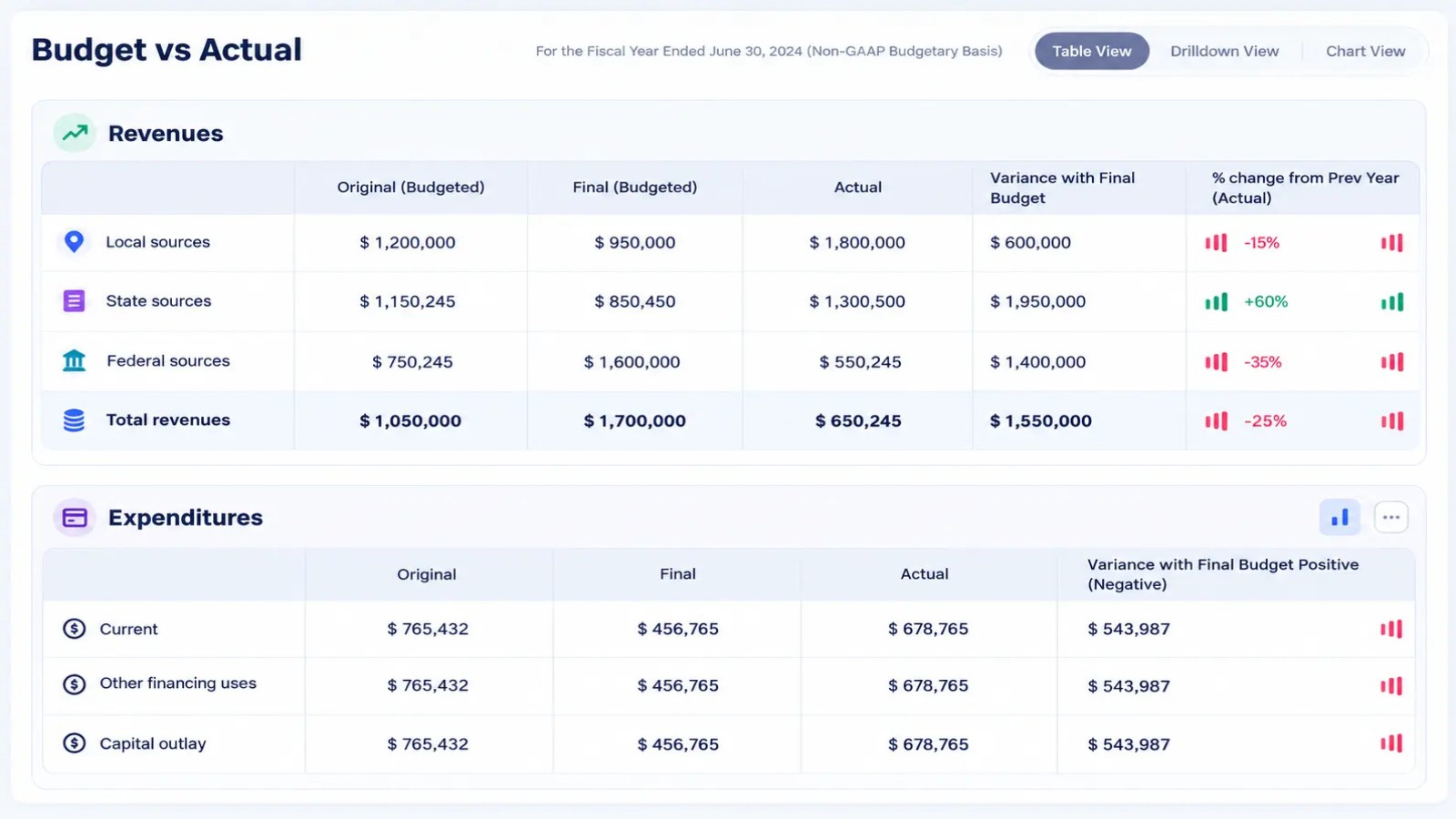
See how actual revenues and expenditures compare with approved budgets throughout the fiscal year. Spot spending variances early, understand where adjustments may be needed, and keep district finances on track.
Plan for enrollment shifts, staffing costs, funding changes, and rising operating expenses. Use financial forecasts and historical trends to evaluate budget scenarios and support long-term K–12 financial sustainability.
Monitor federal, state, and local funding across schools and programs. Keep track of grant expenditures, available balances, and reporting requirements to strengthen financial accountability and make better use of district resources.
Align financial decisions with district priorities and long-term goals.
CFOs & School Business
Officers Oversee budgets, expenditures, fund balances, and financial performance.
School Board Members
Review district finances and support transparent, informed decisions.
Principals & Department Leaders
Monitor school budgets, program spending, and resource allocation.
Frequently Asked Questions (FAQs)
1. How does a K–12 Finance Dashboard support school district budget planning?
A K–12 Finance Dashboard brings revenues, expenditures, fund balances, and historical financial trends into one view. This helps district leaders review budget performance, assess funding priorities, and plan for future financial needs.
2. Can districts track budgeted vs. actual spending throughout the fiscal year?
Yes. Districts can compare approved budgets with actual revenues and expenditures, monitor spending variances, and identify financial changes that may require attention before the next reporting cycle.
3. How can school districts plan for enrollment and funding changes?
By reviewing enrollment trends alongside revenues, staffing costs, and historical spending, districts can better understand potential financial impacts and evaluate budget scenarios for upcoming school years.
4. Can the Finance Dashboard support grant tracking and financial accountability?
The dashboard provides visibility into grant expenditures, fund balances, and funding allocations. This helps school business offices monitor how resources are used and prepare financial reporting and compliance reviews.
5. How does the Finance Dashboard improve school board financial reporting?
Superintendents and school business officers can present financial summaries, budget comparisons, and spending trends in a clear, accessible format. This supports more informed board discussions, fiscal oversight, and financial transparency.
Request a Demo
An AI-Powered Finance Dashboard Built for K-12 Financial Insights and Clarity
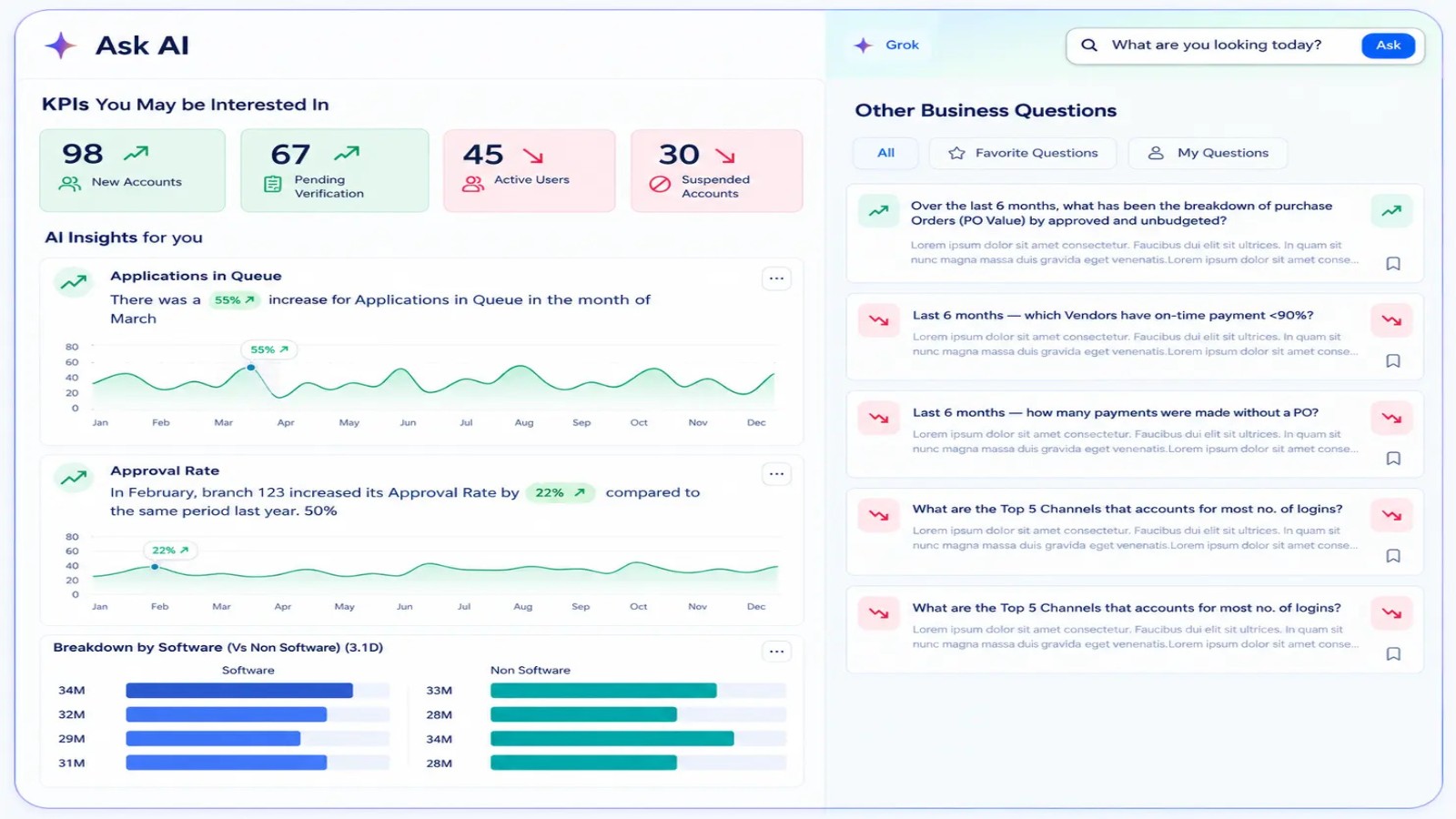
Unify your district’s financial data into one smart dashboard. Get instant insights, automate reporting, and use predictive analytics to drive stronger, faster decisions.
Real-Time Financial Insights Across Departments
Generate Board-Ready Reports With Confidence
Predictive Analytics for Budget Forecasting and Planning
Track Grants, Spending, and Vendor Contracts in One View